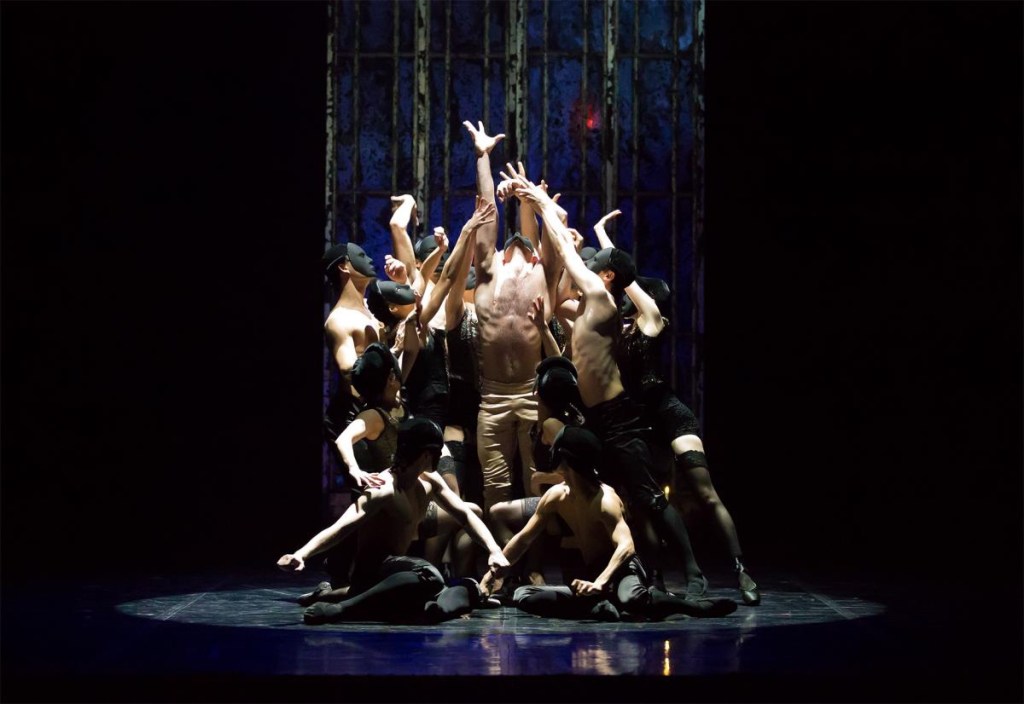
- Date: 26th March 2022 (Matinee)
- Venue: Lyceum Theatre, Sheffield
- Casanova: Lorenzo Trossello
- Cardinal de Bernis: Andrew Tomlinson
- Father Baldi: Harris Beattie
- Seminarians and Servants of the Inquisition: Sean Bates, Filippo de Vilio, Jonathan Hanks, George Liang, Bruno Serraclara, Archie Sherman
- Three Inquisitors: Antoni Cañellas Artigues, Gavin McCaig, Joseph Taylor
- M.M: Aurora Mostacci
- Nuns: Alessia Petrosino, Kirica Takahashi
- Nanetta and Marta, the Savorgnan Sisters: Sena Kitano, Saeka Shirai
- Manon Balletti: Alessandra Bramante
- Musicians: Sean Bates, Filippo de Vilio, George Liang
- Senator Bragadin: Ashley Dixon
- Bellino: Abigail Prudames
- Castrati: Harris Beattie, Kevin Poeung, Archie Sherman
- Henriette: Heather Lehan
- Henriette’s Husband: Harry Skoupas
- Madame de Pompadour: Harriet Marden
- Voltaire: Andrew Tomlinson
- Clairmont: Andrew Banks
- Guest at the Masquerade Ball: Helen Bogatch, Sena Kitano, Heather Lehan, Aerys Merrill, Abigail Prudames, Saeka Shirai, Antoni Cañellas Artigues, Jonathan Hanks, Gavin McCaig, Bruno Serraclara, Archie Sherman, Joseph Taylor
- Courtesans and Gamblers: Helen Bogatch, Gemma Coutts, Sena Kitano, Aurora Mostacci, Aurora Piccininni, Saeka Shirai, Antoni Cañellas Artigues, Filippo de Vilio, Jonathan Hanks, George Liang, Bruno Serraclara, Joseph Taylor
If I were to describe Casanova in five words that begin with L, I’d pick lavish, lusty, luscious, luxurious and Lorenzo Trossello. The last one is cheating slightly, but I’m willing to cheat. As the title character, the performance of the dancer dancing Casanova is central, and a poor Casanova would’ve deflated the performance. But fortunately, Trossello was not.
This performance was the first time I had seen the company, and the ballet. The company stands out among others, for utilising dancers of various ranks in their leading roles, much like the American choreographer George Balanchine would. Personally, I found this worked well. Everyone seemed comfortable in their roles, and from what I understand the dancers get the chance to perform multiple roles, which must be refreshing.
Casanova originally premiered in 2017, with choreography by Kenneth Tindall, and an original score by Kerry Muzzey. The scenario is by Tindall and Ian Kelly, adapted from Kelly’s 2008 biography of Casanova. Adapting a book into a wordless medium is always risky business, but the snippets of Casanova’s life that were chosen to present to the audience mirror and contrast, and are relatively easy to understand.
The first dancing in the show comes from the 6 seminarians. Tindall utilises the hands and arms to show worship through the movement, and when the sets (designed by Christopher Oram) that represent pews it’s rather obviously what is going on, even if you don’t know what a seminarian is (I’m not Catholic). When the group is in prayer, Casanova and the Savorgnan sisters, students at the church, run in, late, immediately showing the title character’s nature to the audience.
The ballet mostly follows Casanova’s experiences with romantic partners: the Savorgnan sisters, Manon Balletti, Bellino, Henriette, Madame de Pompadour and more, living up to Casanova’s name being synonymous with romantic womanisers. However we do see a different side to Casanova. He looks after Henriette, who flees an abusive husband, and demands to be painted reading rather then leaning sexily on a table.
I enjoyed Tindall’s choreography. There’s opportunities for all the dancers (no walking around à la MacMillan) and Tindall seems to favour sequential choreography, which gives the ballet a strong sense of individuality, and brings the characters to life. There’s a table that’s often danced on, and despite my paranoid worry, the dancer’s fluidity continued no matter what they were dancing on.
Trossello, as Casanova, lit up the stage. His Casanova at first, didn’t feel ‘like Casanova’ to a first-time viewer like me, but he didn’t need to. The satisfaction as an audience member comes when you watch a character change and develop, and Trossello created that growth. From his first sexual encounter with the Savorgnan sisters, to his relationship with Bellino, Casanova goes from naivety to control. And Trossello’s dancing was superb- the anguish Casanova feels in the later scenes was reflected in every one of Trossello’s movements.
Making these characters dimensional enough for you to truly care seems to be something that was focused on, as Abigail Prudames achieved the same. As Bellino, who is forced to pretend she’s a boy in order to become a castrato, she steps towards a mirror with such sorrow, creating such a feeling of sympathy in the audience. When she’s able to reveal to Casanova that she’s a girl you feel relieved, because the performance of Prudames and choreography of Tindall has created a character. It’s not just so-and-so, this is Bellino, and you know that.
We are introduced to Bellino in Act 2 Scene 1, the same scene that introduces us to Henriette, a new mother who flees her abusive husband, leaving her young baby behind. Heather Lehan shines in this role, creating another character among the eclectic group that Casanova interacts with. Lehan’s mime directed to Casanova (showing a rounded belly, cradling a baby, and then pretending to be shackled) was agonising to watch. And the ambiguity of Henriette’s fate is moving. I took away from the piece that she was forced back home by her husband to live a life she didn’t want, and you could tell that Casanova was hurt he couldn’t change that fate.
Other performances I noticed included Ashley Dixon as Casanova’s patron Bragadin, a character that goes from being full of comedic upper-class quirks to recovering from a stroke. Harris Beattie as Father Baldi was acrobatically agile, particularly in the scene where his character was tortured. As Manon Balletti Alessandra Bramante moved with the elegance of a human violin, and the musicians (Sean Bates, Filippo de Vilio and George Liang) were true Petipa-style jumpers. Sena Kitano and Saeka Shirai were spirited, seductive and synchronised as the Savorgnan sisters. And I couldn’t forget to mention Harriet Marden as Madame de Pompadour, who truly personified the definition of ‘pomp’. Marden, Dixon and Aurora Mostacci (M.M) all carried themselves with the right amount of class you’d expect them to, and added to the characterisation.
From where I was sitting in the Circle, the lighting (design by Alastair West) added to the atmosphere while making every piece of action visible. When Casanova recounts his escape from prison bars are reflected onto the stage, something I doubt I’d notice if I were sat in the stalls. Often stage lighting can be tricky to pull off, and it was nice to see that the team was taking into account various viewpoints, especially as it’s a touring production.
I enjoyed Act 2 more than I enjoyed Act 1, but I don’t mean that as a bad thing. In Act 1 you’re getting to know these characters- after the time skip in Act 2 Casanova feels like a familiar friend. The ballet’s not overly long, each act being about an hour, and that’s good. The anticipation of the characters’ fates would be lost with scene after scene, although I must admit that by the end I didn’t want to say goodbye to these characters. But I suppose they do say to always leave your audience wanting more.
In the final scene we see paper fall onto the stage. Everyone Casanova has met comes together as he prepares to recount his experiences with them in his autobiography (Histoire de ma vie). This ending tableau, contrasting with the end of Act 1 where the characters watch as Casanova is arrested, was moving, everything I didn’t know I needed the conclusion to be, and is something that will stay with me for a long time.
 Madeleine's Stage