The company now known as the Royal Ballet gave its first performance on 5th May 1931, presenting a mixed bill of short works. Among those works was a new ballet by Ninette de Valois, technically the first ever ballet premiered by the Royal Ballet, and it is this ballet I will be examining today.
Humble Beginnings
The Vic-Wells Ballet company had formed in January 1931 with just a small number of dancers. Lilian Baylis, manager of the Old Vic Theatre and the under refurbishment Sadler’s Wells Theatre, had hired de Valois in the late 1920s. Her role was to produce dances for opera and work on movement training with the actors under Baylis’ employ. For the opera dances she utilised her own students from her school at Roland Gardens, a school which would move into Sadler’s Wells upon the theatre’s opening,
The six founding members of the company (not including de Valois) were:
- Beatrice Appleyard (1913-1994). Appleyard joined de Valois’ school around 1927, and would dance a wide range of roles with the Vic-Wells company. She left the company in 1936 to join the Markova-Dolin Ballet, and later became Ballet Mistress at the Windmill Theatre. She moved to Turkey in the 1950s when she continued to teach. I have written a blog post about her previously which can be read here.
- Freda Bamford (1909-1998). Bamford was a drama student at the Old Vic in the 1920s, which was how she came across de Valois. Though she appeared in many ballets in the early years, she was also known as an actress, and left the company around 1935 to pursue this goal. She built up credits on both stage and screen, playing roles in many TV shows in the early days of the medium.
- Sheila McCarthy (1913-2003). McCarthy could often be found dancing character roles in the early years of the company, but also inherited many of de Valois’ parts. Behind the scenes she taught the youngest pupils at the school and conducted auditions for prospective pupils. She left the company around 1939.
- Ursula Moreton (1903-1973). Moreton had served as de Valois’ assistant since 1926 and became Ballet Mistress of the company when it formed. She kept dancing in a range of roles, and at the end of the Second World War she became Assistant Director of the newly-formed Sadler’s Wells Theatre Ballet, the company that eventually became Birmingham Royal Ballet. She served as Director of the Royal Ballet School from 1952-1968.
- Nadina Newhouse. Of the six original dancers it is Newhouse of whom I know the least. She had been dancing in de Valois’ works since 1929, and would remain with the company until around 1934.
- Joy Newton (1913-1994). Like Moreton, Newton did a large amount of work behind the scenes at the company. From 1942-1946 she was Ballet Mistress, and then assisted de Valois in the formation of the Turkish State Ballet and its associate school. She returned to London in the 1960s and taught at the Royal Ballet School.
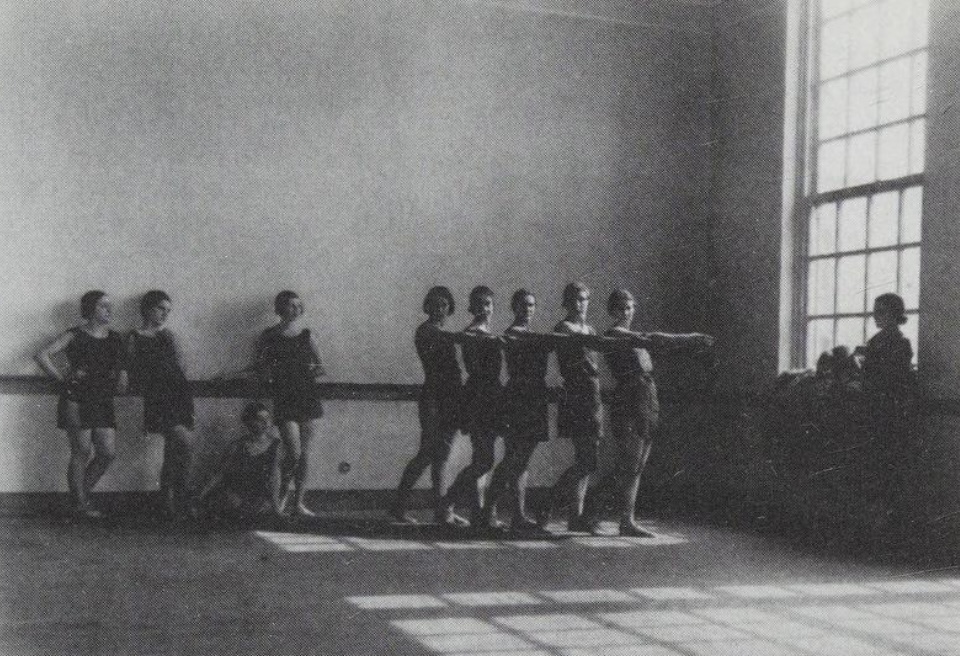
For the first few months of 1931 the dancers participated in operas like Carmen and Aida, but the idea of a evening solely dedicated to ballet was forming. de Valois had produced evenings of ballet in the late 1920s at a loss, so the hope was that with Baylis’ backing the group of dancers would be a more stable company.
The Jackdaw and the Pigeons
Sources vary on exactly how many dancers participated in the first performance of the Royal Ballet. Alexander Bland (1981) puts the number at 19, while Kathrine Sorley Walker (1998) writes that there were 26. Whatever the number, the company brought in male performers for their first performance – dancers Anton Dolin, Stanley Judson and Ivor Beddos, and actor Leslie French.
The Jackdaw and the Pigeons was the only new ballet on that evening’s bill, which also included Les Petits Riens, Danse sacrée et dance profane, Hommage aux belles viennoises, The Faun and Suite de danses. All these ballets were choreographed by de Valois and had originally premiered between 1928 and 1930. Also on the bill was de Valois’ version of the ballet scene from the opera Faust, which had been produced at the Old Vic in March.
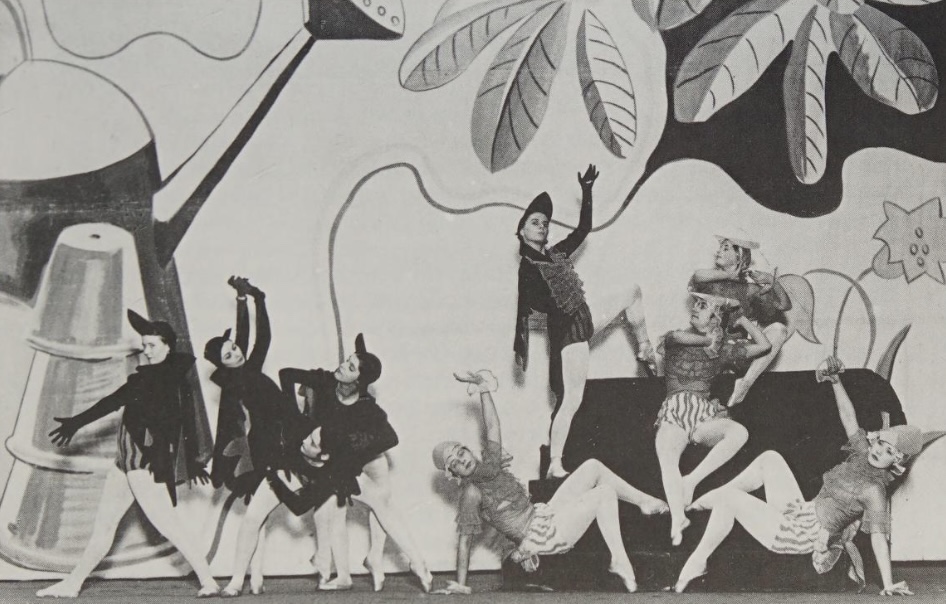
The ballet featured a newly-written score by Hugh Bradford. Bradford, a friend of de Valois’ associate Constant Lambert, is little remembered today, though he did have a work premiere at the Proms later in 1931. The scenery and costumes were designed by William Chappell, a dancer-designer who was to become one of the company’s greatest creatives during the 1930s and 1940s. Aside from his work as a dancer he also designed Ashton’s Les Rendezvous and Les Patineurs, de Valois’ Bar aux Folies-Bergère, the 1940 production of Coppélia and the 1935 production of Giselle.
Aesop’s fable of the bird in borrowed feathers provided the inspiration for the ballet, which was only one scene long. de Valois herself portrayed the bird in borrowed feathers, while the girls of the corps danced jackdaws and pigeons. The actual choreography of the ballet was not singled out by critics, but a review in The Stage (20th May) does compare the finale, where the Jackdaw dies after being rejected by both the pigeons and his own kind, to the Dying Swan.
Critical Response and Subsequent History

Many newspapers reviews of the ballet used words like ‘charming’ and ‘pleasing’ to describe the work, though de Valois’ performances was praised across the board. Some reviews noted there was a little too much mime compared to the amount of dancing, and Bradford’s score met with tepid praise. Overall, the agreement was that the ballet should be seen, but it wasn’t the crowing achievement of the new company.
As well as being on the Vic-Wells’ programme, The Jackdaw and the Pigeons was also danced by the Carmago Society. Named for Maria Carmago, the Society produced evenings of ballet that gave opportunities to rising creatives like Frederick Ashton and composer Constant Lambert, who were to become Resident Choreographer and Musical Director of the Vic-Wells Ballet respectively. The Society only existed from 1930-1993, bridging the gap between the Ballets Russes and the Vic-Wells and Rambert companies, but it was essential to the growth of British ballet. At one evening in June 1931 The Jackdaw and the Pigeons was performed alongside de Valois’ Job and Ashton’s Pomona.
Back at the Vic-Wells, the ballet remained in the repertory through 1931 and into 1932. Bradford’s score was also featured on a radio broadcast in April 1932, with the composer himself playing the piano. Then, in 1993, the company accepted their first provincial engagement, and The Jackdaw and the Pigeons was one of the ballets they performed at Bath Pavilion. Following that engagement the ballet was perhaps performed several more times in London before dropping from the repertory.
Conclusion
The Jackdaw and the Pigeons did not last an overly long amount of time in the repertory of the company, but it could be argued that this was a good thing. As the years progressed the company was able to stage more new works, and produce old classics like Coppélia and Giselle. The ballets from the first days were mostly cycled out of the company in favour of newer works that utilised more dancers.
Today the ballet is remembered as the first premiere of the Vic-Wells Ballet, who later became the Sadler’s Wells Ballet, and then the Royal Ballet. Many of de Valois’ ballets have faced a similar fate to The Jackdaw and the Pigeons, but her work as founder-director of the company rightly places her in the pantheon of British Ballet.
Secondary Sources
Bland, A. (1981). The Royal Ballet, the first fifty years. Doubleday.
Clarke, M. (2004). Obituary: Sheila McCarthy. The Guardian. https://www.theguardian.com/news/2004/jan/03/guardianobituaries.artsobituaries1
de Valois, N. (1992). Come dance with me: a memoir 1898-1956. Lilliput Press.
Neatby, K. (1934). Ninette de Valois and the Vic-Wells Ballet. British-Continental Press.
Walker, K.S. (1998). Ninette de Valois: idealist without illusions. Dance Books.
 Madeleine's Stage