Mona Inglesby (1918-2006) began her ballet company during a world war, an incredible feat within itself. Her International Ballet brought the art to millions of people during its 12 year existence, and boasted a roster of remarkable dancers. Even so, their success as a company has been largely overshadowed by the other British companies that still exist today.
The initial tours undertaken by the company were gruelling, similar to the wartime tours of the Sadler’s Wells Ballet. But even after the Second World War ended, they didn’t step down from their mission. I have traced their journeys across the UK and beyond, and would like to start with the first months.
Note: The schedule I have written is what was printed in newspaper advertisements. I have taken into account changes that were reported on, but I cannot firmly say it is 100% accurate.
The First Year
The International Ballet cannot be described as anything less than Inglesby’s dream. She aimed to entertain the public of Britain during a war, and hoped that a ballet company would be the best way to do it. And she was dedicated: the money for the company came from family funds, she directed the company, choreographed and danced, and brought in creatives who were prepared to aim big.
Among her staff were Guy Charles, who was her General Manager, and Stanislas Idzikowski (1894-1977), her Balletmaster. Idzikowski was a rather accomplished dancer, having spent over a decade in the Ballet Russes. While there he created roles in ballets by Massine, and had originated a leading role in Ashton’s Les Rendezvous (1933) during appearances with the Vic-Wells Ballet. Julian Clifford, confusingly the son of a conductor also named Julian Clifford, was the Music Director for the first tour.
She also brought on board Nicholas Sergeyev (1876-1951). The Russian-trained Sergeyev fled the country after the 1917 revolutions, and brought with him the notations created at the Imperial Ballet in the early 20th century. These notations documented the choreography of Marius Petipa and Lev Ivanov, and Sergeyev began to use the notation to reproduce the ballets. He had worked in Britain with the Vic-Wells Ballets, and would work extensively with the International Ballet.
The Launch: Monday 19th-Saturday 24th May 1941, Alhambra Theatre, Glasgow, Scotland
Advertising for the first engagement promised audiences a ‘full corps de ballet’, a ‘symphony orchestra’ and ‘guest artistes’. There were 21 dancers taking part in this first engagement, alongside 15 musicians, with the plan being to augment the orchestra when it was needed to. The star dancers were Inglesby and Harold Turner, who was on leave from the R.A.F. at the time. The ‘guest artistes’ were Rovi Pavinoff and Nina Takaranova.
- Evenings, Monday 19th & Tuesday 20th; Matinee, Wednesday 21st: Swan Lake Act II, Fête Bohème, Endymion, Bluebird, Dances from Prince Igor
- Evenings, Wednesday 21st & Thursday 22nd: Les Sylphides, Fête Bohème, Dances from Aurora’s Wedding
- Evening, Friday 23rd: Amoras, April Showers, Dances from Aurora’s Wedding
- Matinee, Saturday 24th: Les Sylphides, Divertissements including Gavotte, April Showers, Amoras, Dances from Aurora’s Wedding
- Evening, Saturday 25th: Swan Lake Act II, Amoras, Endymion, Dances from Prince Igor
Some of the ballets are undoubtably familiar, but some were Inglesby originals. Endymion was Inglesby’s first ballet and had premiered in London in 1939. It was based on the poems of Lord Alfred Tennyson, and set to music by Moritz Moszkowski with designs by Sophie Fedorovitch. Amoras, to music by Elgar, had first been seen in Cambridge in 1940. This ballet had designs by William Chappell, and told the story of a knight (Amoras) who sells his wife to the devil. Both of these ballets were short, and featured a short cast, but the designers foreshadow the opulence that would define the International Ballet.
The ‘Bluebird‘ ballet was most likely the Bluebird Pas de deux taken from Aurora’s Wedding. Fête Bohème was a ballet by Harold Turner with designs by Beryl Dean and music by Antonín Dvorák, and is often mistakenly said to have premiered in 1942.
Reviews tell us that on the Monday Mona Inglesby and Harold Turner lead Swan Lake, Rovi Pavinoff and Nina Tarakanova led Fête Bohème, and Pavinoff and Inglesby danced in Endymion. This was most likely the case throughout the week. In Amoras, Pavinoff was the Devil, Turner the titular Knight, Inglesby the Wife and Mavis Ray the Virgin Mary. David Latoff and Ailne Phillips lead April Showers. Handley-Taylor (1947, p.33) also notes that Inglesby performed in Les Sylphides, and danced Princess Florine in Aurora’s Wedding. Inglesby and Turner performed in the Polovtsian Dances from Prince Igor.
Fate of the Alhambra Theatre: Demolished in 1971
Monday 26th-Saturday 31st May 1941: Theatre Royal, Birmingham, England
Inglesby’s Planetomania had originally been due to premiere in Glasgow, being originally advertised in the programme for the Wednesday and Thursday evenings. However, a short review in The Scotsman (22nd May) reveals that the scores for both the conductor and individual orchestra members had been destroyed in an air raid. The article states this happened in London, so I can only presume that this happened before the tour, and they weren’t able to replaces the copies in time. Fête Bohème was performed instead, and Planetomania eventually premiered in Birmingham.
- Evenings, Monday 26th & Tuesday 27th: Swan Lake Act II, Fête Bohème, Endymion, Bluebird, Dances from Prince Igor
- Evenings, Wednesday 28th & Thursday 29th; Matinee, Thursday 29th: Les Sylphides, Planetomania, Aurora’s Wedding
- Evening, Friday 30th: Planetomania, Amoras, Divertissements including Gavotte, April Showers, Aurora’s Wedding
- Matinee, Saturday 31st: Planetomania, Amoras, Divertissements including Gavotte, April Showers, Fête Bohème
- Evening, Saturday 31st: Les Sylphides, Planetomania, Amoras, Dances from Prince Igor
Archived reviews from Birmingham are largely positive, complimenting the ballets, the dancers, the designs and the musicians. The cast on opening night was the same as in Glasgow, and we learn through The Birmingham Post (27th May) that Harold Turner danced in his own Fête Bohème.
A feature from the same day in The Birmingham Gazette details that Nina Tarakanova borrowed her neighbours yacht to get back to England during the fall of France in 1940. It finishes with ‘Mme. Tarakanova does not really feel, however, that a tiny yacht is the safest option in which to travel over even a portion of the Atlantic‘. This is not relevant, but was bizarre enough that I felt it had to be talked about somehow.
Reviews of Planetomania were positive, and Inglesby and Pavinoff’s performances in Les Sylphides were highly praised. The dancers in Planetomania included Inglesby (A Maid, Charlotte), Pavinoff (Adonis), Tarakanova (Venus), Turner (An Astronomer), Ailne Phillips (His Wife), and one of Inglesby’s young soloists, Moira Shearer (Guardian Swallow). Shearer met Inglesby through their association with teacher Nikolai Legat, and had actually performed in the premiere of Endymion before the war. She danced with the International throughout 1941 before joining the Sadler’s Wells Ballet.
Fate of the Theatre Royal: Demolished in 1956
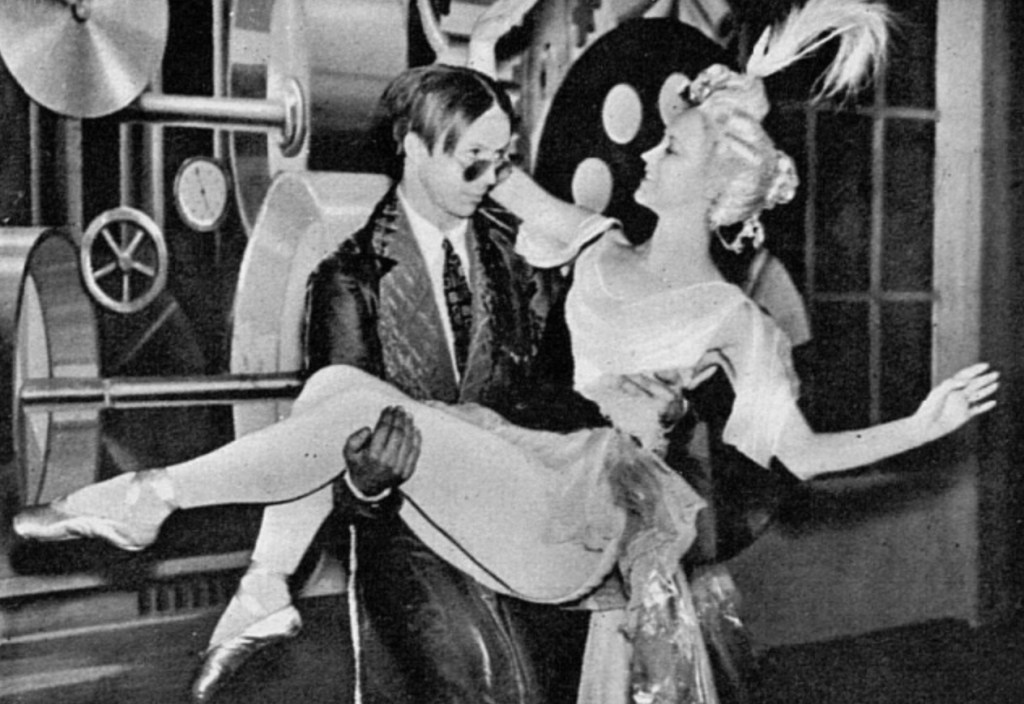
Monday 2nd-Saturday 7th June 1941: Empire Palace Theatre, Edinburgh, Scotland
- Evenings, Monday 2nd & Tuesday 3rd June: Swan Lake Act II, Fête Bohème, Endymion, Dances from Prince Igor
No newspapers are archived online that show the rest of the week’s schedule, although records do show that the same ballets were performed. Going from Glasgow to Birmingham and then back up to Edinburgh is an absolutely brutal schedule, but it is representative of the British touring companies. Dancers describe being on tour for over a year without a proper holiday, alongside dancing in every show the company performed. To add to this, many of the theatres would be new to the dancers, and they’d have little time to familiarise themselves with the stage.
Fate of the Empire Palace Theatre: Still Exists! (as the Edinburgh Festival Theatre)
Monday 9th-Saturday 14th June 1941: Palace Theatre, Manchester, England
In September 1940, during the Manchester Blitz, the Palace Theatre was hit by a bomb. Resiliently, the theatre stayed open, and continued to put on revues and host music hall stars. Theatre continued all through the war, and continued to delight audiences. Programmes (particularly those from London) would have printed warnings of what to do in an air raid, and they always stated one thing: the performance would continue.
- Evenings, Monday 9th & Tuesday 10th: Swan Lake Act II, Fête Bohème, Endymion, Dances from Prince Igor
- Matinee, Wednesday 11th: Swan Lake Act II, Amoras, Fête Bohème
- Evening, Wednesday 11th & Thursday 12th: Amoras, Aurora’s Wedding, Planetomania
- Evening, Friday 13th: Les Sylphides, Planetomania, Fête Bohème
- Matinee, Saturday 14th: Les Sylphides, Aurora’s Wedding, Planetomania
- Evening, Saturday 14th: Amoras, Planetomania, Endymion, Dances from Prince Igor
The company had settled into the swing of things, and had found a repertory that the dancers felt comfortable in. Reviews continued to be positive, with the Manchester Evening News (10th June) highlighting the artistry of Tarakanova and Pavinoff, and the same paper reviewing the Wednesday programmes (12th June) applauding the leading dancers.
They do however describe the ‘colour’ of Planetomania being ‘more vivid than the dancing’. I’ve seen a lot of reviews for this ballet while doing my research, and this could be described as the average review. Most agree that the standout choreography of the ballet came in Moira Shearer’s solo.
Fate of the Palace Theatre: Still Exists!
Monday 16th-Saturday 21st June 1941: Empire Theatre, Liverpool, England
- Evening, Monday 9th: Les Sylphides, Fête Bohème, Endymion, Dances from Prince Igor
You may have noticed that the opening night programme featured Les Sylphides instead of Swan Lake Act II. Mona Inglesby had injured herself, and therefore was unable to dance. A review tells us that Celia Franca took her place in Endymion, and presumably other dances stepped up to the plate as well. I cannot find confirmation as to whether Swan Lake was originally on the bill, but if it was the change of programme implies Inglesby felt she was the only one comfortable enough to dance Odette.
The schedule for the rest of the week was not advertised, and there was a lack of reviews archived online. However, we do know that the week after the International appeared at the Empire, the Anglo-Polish Ballet appeared at Liverpool’s Royal Court Theatre. The Anglo-Polish Ballet were another touring company, founded in 1940, and Rovi Pavinoff had previously appeared with them.
Fate of the Empire Theatre: Still Exists!
Monday 23rd-Saturday 28th June 1941: Theatre Royal, Nottingham, England
- Evening, Monday 23rd: Les Sylphides, Fête Bohème, Endymion, Dances from Prince Igor
- Evening, Tuesday 24th: Amoras, Fête Bohème, Endymion, Dances from Prince Igor.
- Matinee, Wednesday 25th: Les Sylphides, Dances from Aurora’s Wedding, Fête Bohème
- Evenings, Wednesday 25th & Thursday 26th: Swan Lake Act II, Planetomania, Fête Bohème
- Evening, Friday 27th; Matinee, Saturday 28th: Les Sylphides, Dances from Aurora’s Wedding, Planetomania
- Evening, Saturday 28th: Swan Lake Act II, Fête Bohème, Endymion, Dances from Prince Igor
Similarly to last week, Swan Lake was originally announced to open the run. However, a notice in the Nottingham Evening Post on the 23rd announced that for ‘technical reasons’ Les Sylphides was replacing Swan Lake on Monday, and Amoras on Tuesday. The Nottingham Journal (24th June) notes that Inglesby did appear in the programme, so it seems to have been for truly technical reasons. The ballet returned to the programme on Wednesday.
Much was made in the Nottingham papers that Harold Turner was due to return to the R.A.F. in 3 weeks, and would no longer be able to tour with the International Ballet. It was also known to the press that the company for looking at a London run, but it would have to be without Turner.
Fate of the Theatre Royal: Still Exists!
Monday 30th June-Saturday 5th July 1941: Alhambra Theatre, Bradford, England
- Evenings, Monday 30th & Tuesday 1st: Swan Lake Act II, Fête Bohème, Endymion, Dances from Prince Igor
- Matinee, Wednesday 2nd: Les Sylphides, Dances from Aurora’s Wedding, Fete Bohème
- Evenings, Wednesday 2nd and Thursday 3rd: Amoras, Dances from Aurora’s Wedding, Planetomania
- Evening, Friday 3rd: Les Sylphides, Planetomania, Fête Bohème
- Matinee, Saturday 4th: Les Sylphides, Dances from Aurora’s Wedding, Planetomania
- Evening, Saturday 4th: Swan Lake Act II, Amoras, Endymion, Dances from Prince Igor
The second-to-last engagement of the first tour had approached, and the repertory remained strong. Reviews were equally strong, with a focus being placed on the original company ballets. Pavinoff and Tarakanova had consistently been singled out for their performances, but had been continually billed as ‘Guest Artistes’. If Inglesby was losing Turner to the R.A.F., would she lose her guest artists to another company?
Fate of the Alhambra Theatre: Still Exists!
Monday 7th-Saturday 12th July 1941: Brighton Hippodrome, England
The final stop of the tour was at the Brighton Hippodrome, down on the South coast of England. There is no mention of the schedule for this week, only a notice to phone 3131 to learn the schedule, which is the bane of a historian’s life.
That week the Anglo-Polish Ballet spent in Coventry, while Glasgow audiences got to enjoy the company of Lydia Kyasht, an accomplished ballerina who trained alongside Tamara Karsavina at the Imperial Ballet School of Saint Petersburg. These touring companies traversed Britain week after week, but now the International had their eyes set on a larger destination: London.
Fate of the Brighton Hippodrome: Still Exists (though isn’t currently being used as a theatre)

Tuesday 26th August-Saturday 4th October 1941 : Lyric Theatre, London, England
Opening with a regional tour meant the company could prepare themselves for the capital. London had not slowed down due to the war, and it was noted that the lack of overseas visitors had not left the cultural sector without any patrons. The London theatres that August were filled with a range of shows, and they had not been that busy since before the war begun.
A 3-week season had been arranged in the West End’s Lyric Theatre. More attention was given to companies who could prove themselves in London, but it also meant more critics to impress. And thankfully, she had her three stalwarts with her. Tarakanova and Pavinoff both returned, and Turner made it back as well. He’s still described as being on leave in London reviews.
Serge Krish was engaged to conduct the orchestra. Krish was a conductor-pianist, who had founded the New Metropolitan Symphony Orchestra in the mid-1930s. Idzikowski continued to work with the company, something that was frequently highlights in company press. The British companies all boasted their own links to Diaghilev’s Ballet Russes, and Idzikowski was the International’s.
- Evening, Tuesday 26th August: Swan Lake Act II, Fête Bohème, Endymion, Dances from Prince Igor
- Evening, Thursday 25th September: Dances from Aurora’s Wedding, Carnaval, Endymion, Dances from Prince Igor
Their opening night programme was tried and trusted by the company, and it seemed to pay off. Critical consensus in the general press was mostly positive, though not across the board raves. They appreciated the efforts made by Inglesby to spare no expense on designs and music, and appreciated the leading dancers of the company. They did note, however, that it was a largely competent performance. The company had talent, but needed more spark.
I do not have the schedule for the rest of the season, but it included all the ballets the company had performed on tour. By the first Friday Amoras and Planetomania had made their way onto the bill, and reviews praised Inglesby’s comic choreography in the latter. An opening night review (The Stage, August 28) named all the dancers who appeared on stage that evening: Mona Inglesby, Harold Turner, Nina Tarakanova, Rovi Pavinoff, Anna Marinova, Celia Franca, Ailne Phillips, Joyce Graeme, Anne Negus, Eileen Ward, Lisa Brunelle, Sonia Arova, Leo Yersley, David Yerval, Rex Reid, John Pygram, Hugh Maw, Peter Garst, Jean Beazley, Gwenda Sheldrake, Angela Bailey, Barbara Barrie, Muriel Harding and Moira Shearer.
A new ballet added was Carnaval, an old favourite of the Ballet Russes era that had first been performed in 1910. Idzikowski and his wife Vanda Evina reproduced Fokine’s choreography, much like they had done with Les Sylphides. Idzikowski had performed Harlequin in Carnaval with both the Ballet Russes and the Vic-Wells Ballet. This role was originated by Leonid Leontiev in the original Russian production, and then danced by Vaslav Nijinsky in the 1910 Ballet Russes production.
Their season was supposed to end on Saturday 15th, but on the 5th newspapers reported that a 3-week extension had been arranged. This was referred to as a ‘matinee season’, as the schedule was upside down. There would be a matinee everyday from Monday to Friday, and then evening performances on Tuesday and Saturday. Many people from the London suburbs were averse to travelling into the centre in the evenings, so the matinee season provided them with an opportunity to see the company.
The International Ballet’s success in London was reported on far and wide. Cities they had visited shared reviews from the capital, and it was reported in the Aberdeen Journal (4th September) that General Manager Guy Charles had promised to bring the company to the city. By the 11th September The Stage were reporting a new tour would begin in October. The dancers would get a short break before going off on the road again.
Fate of the Lyric: Still Exists!
Monday 20th-Saturday 25th October 1941: Shakespeare Memorial Theatre, Stratford-upon-Avon, England
The second provincial tour began in the Bard of Avon’s stomping ground. Turner continued on with the company, as did Tarakanova and Pavinoff. Julian Clifford returned to direct the orchestra. Advertisements for the Stratford performances noted the company had now entertained over 100,000 people in their first half-year of existence.
Evening, Monday 20th: Swan Lake Act II, Fête Bohème, Endymion, Dances from Prince Igor
John Bourne in The Stratford-upon-Avon Herald (24th October) noted that the opening night programme showed why ‘ballet, which languished for so many years in England, now ranks so high in public estimation’. Alongside the praise for the leading dancers he praises Barbara Barrie as Diana and Joyce Graeme as Aurora in Endymion. He also attended a pre-performance reception with the principals on the Monday, which gave eager balletomanes a chance to meet the performers.
Fortunately, Miss Inglesby is the débutante daughter of wealthy parents, and her decision that “ballet must go on” was fairly easy of accomplishment.
John Bourne on the founding of the International, The Stratford-upon-Avon Herald, Friday 24th October 1941 (p.3)
Fate of the Shakespeare Memorial Theatre: Still Exists! (as the Royal Shakespeare Theatre)
Monday 27th October-Saturday 1st November 1941: Harrow Coliseum, England
Evening, Monday 27th: Swan Lake Act II, Fête Bohème, Endymion, Dances from Prince Igor
And once more the International were off on their journey across mainland Britain. In Harrow, located in Greater London, they performed at the Coliseum, which seems to have spent some time converting itself between and theatre and a cinema during the 20th century.
A positive review of the opening night was printed in the Harrow Observer on Friday 31st October. The reviewer praises the discipline of Inglesby and Turner in Swan Lake, alongside highlighting the dancers who performed solos as clouds in Endymion: Anna Marinova, Anne Negus, Joan Harris, Moira Shearer and Gwenda Sheldrake.
Fate of the Harrow Coliseum: Demolished in the 1950s
Monday 3rd-Saturday 8th November 1941: Alhambra Theatre, Glasgow, Scotland
The Alhambra Theatre was the scene of the International’s first ever performances, and in November they danced at the theatre again. Carnaval had found a permanent place in the repertory, and the company deviated from their usual programmes, particularly their opening night programme.
- Evening, Monday 3rd: Swan Lake Act II, Amoras, Planetomania
- Evening, Tuesday 4th: Carnaval, Swan Lake Act II, Endymion, Dances from Prince Igor
- Matinee, Wednesday 5th: Les Sylphides, Dances from Aurora’s Wedding, Fête Bohème
- Evening, Wednesday 5th: Les Sylphides, Amoras, Planetomania
- Evening, Thursday 6th: Carnaval, Amoras, Planetomania
- Evening, Friday 7th: Carnaval, Fête Bohème, Planetomania
- Matinee, Saturday 8th: Carnaval, Amoras, Fête Bohème
- Evening, Saturday 8th: Swan Lake Act II, Planetomania, Endymion, Dances from Prince Igor
The Glasgow reviewers were glad to see Planetomania, which if you recall was originally supposed to premiere in the city. A review in The Scotsman (4th November) praises the performances in the ballet and also notes that a large crowd were in attendance. The Daily Record (5th November) called the Tuesday performance of Swan Lake the best Swan Lake seen in the city in the past 10 years. It was a successful return to Glasgow for the company, but it did cause another long journey for the company.
Monday 10th-Saturday 15th November 1941: New Theatre, Oxford, England
After zig-zagging up and down the country the company found themselves in Oxford. There are no detailed schedules available for this engagement, but we can get a sense of their advertising through articles and adverts published prior to their performances.
The adverts for the company emphasise the West End run, and how successful it was. This hasn’t changed over the years, and adverts today still boast ‘Direct from the West End!’. They conjure up nostalgia by mentioning the names of Diaghilev and De Basil. Diaghilev’s Ballet Russes had triumphed in London, and the De Basil Original Ballet Russe has become a popular successor.
There’s even more name dropping as the designers William Chappell, Rex Whistler and Doris Zinkeisen are brought up. Publicity for the company made it very clear that this was not a scaled-down tour. The dancers highlighted are Turner, Tarakanova, Pavinoff, Ailne Phillips, Rex Reid, Anna Marinova and Barbara Barrie. It’s obvious that other dancers in the company were proving themselves worthier and worthier with each engagement, which is probably a good thing considering Tarakanova and Pavinoff were still ‘Guest Artistes’.
Fate of the New Theatre: Still Exists!
Tuesday 18th-Saturday 22nd November 1941: Prince of Wales Theatre, Cardiff, Wales
The company’s first engagement in Wales began on a Tuesday, and not a Monday, perhaps to give the company an extra day of rest after travelling. To make up for this they gave matinees performance on Wednesday, Thursday and Saturday.
- Evening, Tuesday 18th; Matinee, Wednesday 19th: Swan Lake Act II, Fête Bohème, Endymion, Dances from Prince Igor
- Evening, Wednesday 19th: Les Sylphides, Fête Bohème, Amoras
- Matinee, Thursday 20th: Amoras, Dances from Aurora’s Wedding, Fête Bohème
- Evening, Thursday 20th: Les Sylphides, Amoras, Planetomania
- Evening, Friday 21st: Amoras, Dances from Aurora’s Wedding, Planetomania
- Matinee, Saturday 22nd: Les Sylphides, Dances from Aurora’s Wedding, Endymion, Dances from Prince Igor
- Evening, Saturday 22nd: Swan Lake Act II, Planetomania, Endymion, Dances from Prince Igor
Fate of the Prince of Wales Theatre: Became a cinema in 1957, in use as a pub since 1999
Monday 1st-Saturday 6th December 1941: Theatre Royal, Nottingham, England
If the International Ballet were touring during the last week of November, no newspapers were advertising them. They started December with a return to Nottingham, and a change in the billing. By this time, it was only Pavnioff who was advertised as a Guest Artiste – Tarakanova was a full member of the company.
- Evening, Monday 1st: Swan Lake Act II, Amoras, Fête Bohème
- Evening, Tuesday 2nd: Amoras, Endymion, Fête Boheme, Dances from Prince Igor
- Matinee, Wednesday 3rd: Les Sylphides, Amoras, Fête Bohème
- Evening, Wednesday 3rd: Les Sylphides, Dances from Aurora’s Wedding, Planetomania
- Evening, Thursday 4th: Swan Lake Act II, Planetomania, Carnaval
- Evening, Friday 5th: Les Sylphides, Carnaval, Planetomania
- Matinee, Saturday 6th: Les Sylphides, Carnaval, Endymion, Dances from Prince Igor
- Evening, Saturday 6th: Swan Lake Act II, Planetomania, Endymion, Dances from Prince Igor
We also learn more about Turner’s military service. In June he had been posted to an R.A.F. base in Lincolnshire, but was given special leave for the London season. The special leave had not yet expired, meaning Turner was free to continue dancing. Another company member, David Latoff, had joined the airforce alongside Turner.
Inglesby had also disclosed her company plan to journalist W.B. Stevenson, and in his column he writes that the company would get a break after Christmas. There would then be another privincial tour. She also teases a new ballet.
Finally, a review of the Wednesday evening performance (Nottingham Journal, Thursday 4th) commends the company, particularly the corps de ballet’s work in Les Sylphides. They also praise Tarakanova and Pavinoff as Aurora and her Prince, and Turner and Inglesby as the Bluebird and Princess Florine.
Monday 8th-Saturday 13th December 1941: His Majesty’s Theatre, Aberdeen, Scotland
During the London season Guy Charles had promised the company would visit Aberdeen, and he had kept his word.
- Evenings, Monday 8th and Tuesday 9th: Swan Lake Act II, Fête Bohème, Endymion, Dances from Prince Igor
- Matinee, Wednesday 10th: Les Sylphides, Dances from Aurora’s Wedding, Fête Bohème
- Evening, Wednesday 10th: Les Sylphides, Amoras, Planetomania
- Evening, Thursday 11th: Les Sylphides, Dances from Aurora’s Wedding, Planetomania
- Evening, Friday 12th: Amoras, Dances from Aurora’s Wedding, Fête Bohème
- Matinee, Saturday 13th: Les Sylphides, Amoras, Endymion, Dances from Prince Igor
- Evening, Saturday 13th: Swan Lake Act II, Planetomania, Endymion, Dances from Prince Igor
Similarly to in Nottingham, a review of the Thursday programme in the Aberdeen Press and Journal (12th December) praises Aurora’s Wedding. This time Tarakanova and Pavinoff were the Bluebird and Princess Florine, while Inglesby and Turner danced Aurora and her Prince. Also singled out are Sonia Arova, Eileen Ward and Ronald Bruce for the Chinese Dance, and Anne Negus and David Kerval for Red Riding Hood and the Wolf.
The reviewer in the 11th December Press preferred Amoras to Planetomania. They praise the performances of Turner (Amoras), Inglesby (His Wife) and Pavinoff (The Devil), along with Muriel Harding, who was dancing the role of the Virgin Mary. Of Planetomania, they say: ‘one almost feels that there is a little too much dancing for dancing’s sake‘, but they praise the costumes and decor.
Fate of His Majesty’s Theatre: Still Exists!
Tuesday 16th-Saturday 20th December 1941: New Hippodrome, Coventry, England
The company travelled all the way back down to Coventry. Like in Wales, they began performances on a Tuesday, giving matinees on Wednesday, Thursday and Saturday. Evening performances commenced at 5:15pm, perhaps because of blackout regulations.
- Evening, Tuesday 16th: Swan Lake Act II, Fête Bohème, Endymion, Dances from Prince Igor
Wednesday 24th December 1941-Saturday 3rd January 1942: Manchester Opera House, England
The company spent Christmas in Manchester, this time at the Opera House instead of the Palace Theatre. Their schedule included evening performances every night, with matinees on the 25th, 26th, 27th, 31st, 1st and 3rd. The programmes included Carnaval alongside all the other usual ballets.
- Monday, December 29th: Les Sylphides, Carnaval, Endymion, Dances from Prince Igor
Barely anything has been archived from this engagement, but a surviving review (Manchester Evening News, 30th December) praises the company. The dancers singled out are Inglesby (in Les Sylphides and Dances from Prince Igor), Tarakanova (in Les Sylphides and Carnaval), Turner (as Harlequin in Carnaval and in Dances from Prince Igor), and Pavinoff, Barbara Barrie and Joyce Graeme (all in Endymion).
Fate of the Opera House: Still Exists!
The International Ballet would get a break after this engagement, beginning their 1942 tour in Blackpool on Monday 19th. Over the course of 1941 they had proven they could stand amongst the ballet companies in Britain, and delight audiences all over the country.
Inglesby had achieved her goal: she had her company. They had a strong repertory of ballets, and a strong set of dancers. Now they needed to keep the momentum going, but that will be a story for another post.
Secondary Sources
Eliot, K. (2008). Starved for Beauty: British Ballet and Public Morale during the Second World War. In Dance Chronicle, 31(2), pp. 175-210
Eliot, K. (2012). English in Flavor and Form: Mona Inglesby’s Choreography for the International Ballet. In Dance Chronicle, 35(1), pp.54-83
Handley-Taylor, G. (1947). Mona Inglesby: Ballerina and Choreographer. Vawser & Wiles.
 Madeleine's Stage
Pingback: The International Ballet: Tracing their Tours, 1942 | Madeleine's Stage